Safeguard Security Services

Mobile Patrol Security

Mobile Patrol Security Services

Protect your property and neighborhood with reliable and trustworthy mobile patrol security services. Contact us today to learn more. 

START SECURITY SERVICES TODAY

Licensed & Insured
GPS-Verified Checkpoints
Real-Time Reporting
Randomized Routes
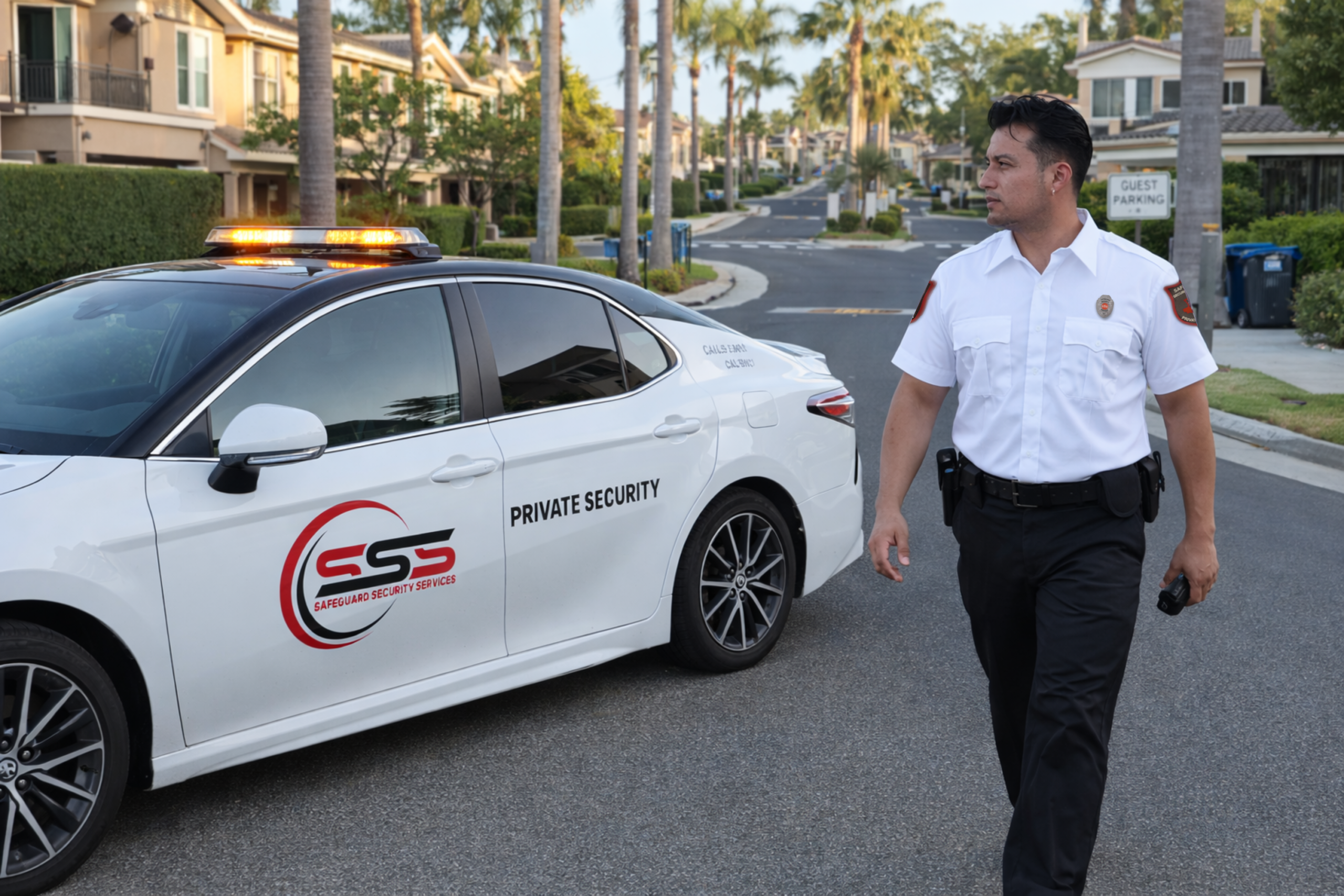
Marked Patrol Vehicles

Not every property needs a guard standing at the front door for an entire shift. Some sites need visibility and deterrence at specific times, a marked vehicle checking in, verifying locks, confirming that gates are closed, and lights are working. That’s what mobile patrol security services are designed for.


Mobile patrol security is one of the most misunderstood security services on the market. Some people assume it means a car drives past once a night. Other people think of it as a discounted standing guard with the same coverage. 


Neither is accurate, and that misunderstanding between expectation and delivery is where most patrol contracts fall apart. If you’re weighing mobile security patrol services for a property you manage, this page will help you figure out whether the model fits, and what’s the difference between a useful patrol program from one that’s just a line item on an invoice. 
Mobile Patrol Security Services
Coverage Models

Different Coverage Models Based on Your Property

Before looking at mobile patrol services, decide which coverage model best fits your property. The two different models we offer are shared patrols and dedicated patrols. Shared patrol and dedicated patrol serve different needs, and most providers don’t draw the line clearly enough.
Shared Patrol
Cost-Effective Coverage
8–12Properties Per Route
2–4Visits Per 8-Hr Shift
20–30 minPer Stop Duration
  • Multiple properties on a single officer's nightly route
  • Check entry points, walk perimeter, file digital report
  • Priced per visit or monthly flat rate
Dedicated Patrol
Full-Shift Presence
1Property Per Officer
6–10 hrsShift Duration
$28–$35/hrHourly Pricing
  • One officer + marked vehicle assigned to your property
  • Vehicle stays on-site or follows a defined route
  • Ideal for large centers, warehouses, neighborhoods

Best Fit: Shared Patrol

Shared patrol means your site is one of several on a single officer’s nightly route. A standard shift covers 8–12 properties, with each location receiving 2–4 visits across an 8-hour window. Each stop runs 20–30 minutes, enough time to check entry points, walk a section of perimeter, and file a digital report. Properties that benefit most from this model include:
Commercial office parks that already have alarm systems and cameras but need a physical presence to verify everything's actually working
Gated residential and HOA communities, parking enforcement, noise complaints after quiet hours, and a marked vehicle that residents can see making rounds
Construction sites in early phases. Expensive material gets stolen all the time but in the beginning when there isn't a lot of expensive material or equipment, a full-time guard is overkill
Multi-tenant retail centers after business hours, where the main need for patrol is to deter trespassers and check doors and gates for signs on forced entry

Best Fit: Dedicated Patrol

Dedicated patrol is a different service. You get a security officer as well as a marked patrol vehicle assigned to your property. The vehicle stays on site or follows a defined route. The shifts can run 6–10 hours and they are priced on hourly basis instead of per visit. These are great for large shopping centers, residential neighborhoods, and warehouses. Especially during nighttime.
Is shared patrol enough? The question we hear most from commercial property managers is whether shared patrol actually provides enough coverage. Our honest answer: it depends on what's already in place. If your building has a working alarm system, camera coverage, and secured access points, shared vehicle patrol security services fill the physical verification gap without the cost of a full-time presence. But if you've had repeated break-ins, chronic trespassing, or after-hours vandalism, you probably need someone on site all night, and shared patrol won't solve that problem.
Real-world example: We have a client in Van Nuys that has an 8 hour full time guard during business hours and two mobile patrol visits during the night. This model fits the property because the purpose of the night patrols is to deter people from camping in the parking lot and making sure the doors remain locked and there is no unauthorized overnight parking.
Route Design

How Patrol Routes Are Designed for Maximum Coverage

A patrol route is not a car making random rounds through a parking lot. At Safeguard, we design the routes after a site assessment where we physically walk the property, identify vulnerability points, and create a route that puts the officer at specific locations.
The four factors that help us design the routes include:
1

Physical Layout

The property's entrances, perimeter, blind spots, and structural features

2

Peak Risk Windows

The time windows when risk peaks — late night, shift changes, weekends

3

Checkpoint Locations

The checkpoint locations that require verification — gates, doors, panels

4

Route Capacity

For shared routes, the number of stops every day/night on the rotation

A 200-unit apartment community with two vehicle entrances and a pool area gets a completely different route than a five-building office campus with underground parking.

Randomized Patrol Times

Randomizing patrol times is the piece most clients never think about. If a patrol vehicle arrives at the same gate at the same time every night, anyone watching learns the schedule within a week. At Safeguard, we offer fixed patrol times and randomized routes. Our guard hits every checkpoint within a given shift, but the order and exact arrival time shift each night.
8 PM – 10 PM

Visit 1

Entry points, perimeter walk, report filed

10 PM – 1 AM

Visit 2

Randomized arrival, parking + gate check

1 AM – 4 AM

Visit 3

Peak risk window, extended stop

4 AM – 6 AM

Visit 4

Final sweep, lighting check, report

We track every checkpoint through Silvertrac, then have our dispatch team verify it. Guards who know their stops are verified in real time, perform differently than guards who know nobody’s checking. (That’s not a criticism of individual officers. It’s a design principle. Accountability systems change behavior before problems happen, not after.)

Not Sure Which Patrol Model Fits Your Property?

Start with a free site assessment. We'll walk the grounds and give you an honest recommendation.

Trusted by Property Managers Across Southern California

Rated Excellent on Google

Service Area

Areas We Serve Across Southern California

Safeguard Security Services provides mobile patrol coverage throughout the greater Los Angeles area and surrounding regions. Our patrol routes are designed for each community’s specific needs, from urban commercial corridors to suburban residential neighborhoods.

Los Angeles

Downtown, Hollywood, Koreatown, Mid-Wilshire, Westlake

San Fernando Valley

Northridge, Van Nuys, Encino, Sherman Oaks, Reseda

Burbank & Glendale

Commercial districts, media offices, mixed-use

Pasadena

Old Town, commercial parks, residential communities

Santa Clarita

Valencia, Newhall, Canyon Country, Saugus

Conejo Valley

Thousand Oaks, Westlake Village, Agoura Hills

West Los Angeles

Beverly Hills, Culver City, West Hollywood, Brentwood

Orange County

Anaheim, Irvine, Santa Ana, Fullerton, Costa Mesa

Don't see your area? We're expanding patrol routes regularly. If your property is in Southern California, call us at (818) 469-0703 — we'll let you know if we can cover your location.
Evaluation

Common Mistakes When Hiring Mobile Patrol Security Services

1

Wrong Coverage Model

The most common mistake clients make with security guard patrol services isn't picking the wrong company. It's getting the wrong coverage model entirely. If a property that needs dedicated patrol hires shared patrol service, they will be disappointed every time, and a site that only needs shared coverage buying dedicated service is overpaying for a service they don't need. Getting the right model is the most important part of hiring patrol services.

2

Comparing Bids on Visit Count Alone

Second mistake: comparing bids on visit count alone and not what the guards do during the visits. Two providers can both quote "4 visits per night," but one has a defined post order and a check list that includes everything that needs to be checked and the other one just turns the security lights on when the guard arrives, takes a picture from outside the property then leaves. Ask for the route maps, the checkpoint list and a sample patrol report. If the provider can't produce any of those before you sign, that tells you how the contract will go.

3

No Field Supervision

And then there's the lack of supervision. On a shared mobile patrol security route, the officer is working alone for hours. Who's verifying the work? Safeguard's field supervisors conduct unannounced spot checks on patrol officers mid-route. The way we do it is our field supervisor goes to a patrol location 10 minutes before the scheduled patrol not just confirming the officer showed up, but reviewing report quality, checking uniform standards, and verifying that the officer is physically walking checkpoints rather than logging them from the driver's seat. Ask any patrol provider you're considering whether they run field supervision. Most rely entirely on dispatch or GPS data without ever putting a supervisor in the field.

Before You Sign: What to Ask Any Provider

Question to AskGood AnswerRed Flag
Can I see a sample patrol report?GPS-stamped, timestamped digital report with photos"We'll set that up after you sign"
What does your checkpoint list look like?Specific to your property's layout and risk areasGeneric or nonexistent
Do you run field supervision on patrol routes?Unannounced supervisor visits mid-route"We use GPS tracking" (only)
What happens if a guard misses a checkpoint?Dispatch calls within 15 minutesNo defined protocol
Can I review reports without calling you?Client portal with direct access"We email weekly summaries"
Can I see a sample patrol report?
Good Answer
GPS-stamped, timestamped digital report with photos
Red Flag
"We'll set that up after you sign"
What does your checkpoint list look like?
Good Answer
Specific to your property's layout and risk areas
Red Flag
Generic or nonexistent
Do you run field supervision on patrol routes?
Good Answer
Unannounced supervisor visits mid-route
Red Flag
"We use GPS tracking" (only)
What happens if a guard misses a checkpoint?
Good Answer
Dispatch calls within 15 minutes
Red Flag
No defined protocol
Can I review reports without calling you?
Good Answer
Client portal with direct access
Red Flag
"We email weekly summaries"
Getting Started

Switching Providers Doesn't Have to Be Complicated

If you’re under contract now with a company that isn’t delivering, the switch doesn’t have to be complicated. We offer a 30-day trial period to make the transition easier and give you enough time to evaluate our service, communication, and reporting quality, and see if it meets your standards without locking you into a commitment before you’ve seen the actual work. We offer this because we are confident in our service and believe that we can earn your trust as well without asking for a long term commitment off the bat.
The fastest way to know whether mobile patrol fits your property is a site assessment. We’ll walk the grounds, review your existing systems, and recommend a coverage model based on what the property actually needs. Sometimes the answer is dedicated patrol. Sometimes it’s shared. And sometimes the answer is that patrol isn’t the right service at all, which we’ll tell you directly.

Ready for a Free Site Assessment?

We'll walk the grounds, review your existing systems, and recommend a coverage model based on what the property actually needs.

FAQ

Frequently Asked Questions

How much does mobile patrol security cost per month?
The pricing depends on the number of visits and type of patrol. Some companies offer fixed patrol pricing. For example 3 patrols a night for $3,000 a month. Other offers per patrol pricing. For example, $30 per patrol. It all just depends on the company's pricing system. Dedicated patrol, one vehicle assigned to one property for a full shift, costs significantly more, usually $28–$35 per hour for the full assignment. Safeguard provides itemized pricing sheets that break out every component, so you can see exactly what drives the total before you commit.
What's the difference between shared and dedicated mobile patrol?
Shared patrol means your property is one of several on an officer's nightly route. You get scheduled visits, typically 2–4 per visits per shift, with the officer moving between sites. Dedicated patrol assigns one officer and one vehicle to your property for the entire shift, no shared stops, no leaving your property. The right model depends on your risk level, existing security systems, and budget.
Can mobile patrol officers make arrests?
Under California Penal Code 837, private security officers can perform a citizen's arrest when they witness a misdemeanor or have reasonable cause to believe a felony was committed. They can't detain someone on suspicion alone. In practice, our patrol officers are trained to observe, document, report, and contact law enforcement rather than attempt physical detainment unless safety requires immediate action.
How many times per night will a patrol vehicle visit my property?
On a shared route, most properties receive 2–4 visits per 12-hour shift. The exact count depends on your contract, the number of checkpoints at your site, and total route size. Each visit lasts 10–30 minutes. Dedicated patrols are different. They are stationed on the same property for the duration of the shift.
What does a mobile patrol officer actually check during each stop?
It depends on post order, but a typical stop includes exterior door and gate verification, parking lot and perimeter checks, lighting inspections, signs of forced entry or vandalism, and a visual sweep for trespassing or loitering. Everything is logged digitally with GPS coordinates and timestamps. Some contracts add interior common-area checks or alarm panel verification.
Do mobile patrol vehicles carry markings?
Safeguard uses marked vehicles with company branding and emergency lighting. Marked vehicles make a big difference in deterrence, someone considering a break-in or trespass sees the vehicle and moves on. In some cases, clients request unmarked vehicles for observation-focused assignments, but marked patrol is the standard for most commercial and residential contracts.
How does mobile patrol work with my existing camera and alarm systems?
Mobile patrol doesn't replace your cameras or alarms, it adds a physical layer. When our officers arrive at a checkpoint, they confirm that cameras are positioned correctly, alarms are enabled, and no one has tampered with equipment. If something looks off, the officer documents it with photos and timestamps in the patrol report and notifies dispatch immediately.
What's the most common reason mobile patrol contracts fail in the first 90 days?
Mismatched expectations. The client needed dedicated coverage but hired shared patrol to save money, or the provider oversold visit frequency without enough route capacity to deliver. The second most common reason: no checkpoint verification system. Without GPS-stamped reporting, there's no way to confirm patrols actually happened, and when an issue happens, its your word against theirs.
Why do some properties on shared routes seem to get better service than others?
Route design. Properties placed at the beginning or end of a rotation tend to get slightly longer stops because the officer is fresh or wrapping up. Mid-route properties sometimes get compressed visits when the officer is running behind. Good route design and randomized sequencing minimize this, but it's a real operational factor that most providers won't mention. We build routes with time buffers between stops specifically to prevent mid-route compression.
How quickly can Safeguard start mobile patrol after I sign a contract?
Standard deployment takes 3–5 business days. That includes the site assessment (if not already completed), post order development, checkpoint mapping, route integration, and officer assignment. Emergency or expedited starts are possible within 24–48 hours for properties with urgent needs, though the post order may run in draft form for the first few shifts while we refine checkpoint details.
About Us

About Safeguard Security Services

Safeguard Security Services is a licensed and insured security company protecting commercial, residential, and industrial properties across Southern California since 2015. We hold California PPO License #122311 and every officer on our team carries a valid BSIS Guard Card.
We built our company around one idea: accountability you can actually verify. That means GPS-tracked patrols, real-time client portal access, three layers of guard supervision, and a 30-day trial on every new contract. If we’re not the right fit, you’ll know within the first month — and you can walk away.
2015Established
90%Client Retention
24/7Dispatch Monitoring
30-DayTrial Contract

Our Full Range of Services

Headquarters: 18531 Roscoe Blvd, Northridge, CA 91324

License: California PPO #122311